The Truth Behind the Spin: Debunking the Biggest Slot Machine Myths
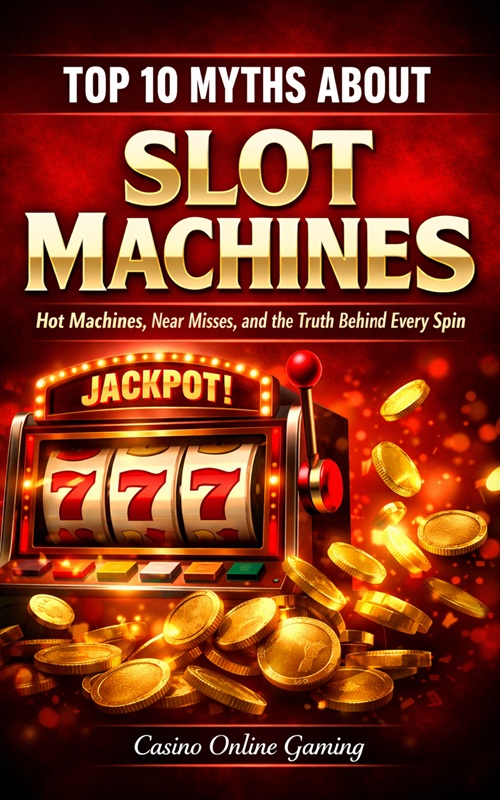
Slot machines are sophisticated mathematical systems engineered to ensure that every outcome is governed by fixed probabilities rather than patterns or luck. Each result is an independent event, meaning the machine has no memory of what occurred in previous rounds or how much money has been wagered. By understanding the reality of randomness, you can appreciate these games as structured entertainment rather than mysterious puzzles waiting to be solved.
Slot Machines Run Hot and Cold
Slot machines do not possess internal temperatures or payout moods that shift based on recent player activity. Instead, they operate on independent outcomes where every single spin is mathematically isolated from the preceding one by the software. What players often perceive as “hot” or “cold” streaks is simply natural randomness clustering together, a phenomenon that occurs frequently in any truly random system.
A Machine Is Due to Hit
The “gambler’s fallacy” leads many to wrongly believe that a prolonged losing streak somehow makes a future win more mathematically likely. In reality, the machine does not “owe” anyone a payout because it retains no memory of previous losses and maintains consistent probabilities regardless of its history. Every press of the button initiates a fresh calculation with the exact same odds as every spin that came before it.
Near Misses Mean a Jackpot Is Close
A near miss is merely a visual arrangement on the screen that has no statistical bearing on how close the next win actually is. Modern gaming utilizes virtual reel mapping where extra blank positions can make high-paying symbols appear just outside the payline to create tension. Because the result is locked in by the random number generator the instant you press the button, the “almost” win is a purely cosmetic event designed for emotional impact.
Casinos Tighten Machines at Certain Times
Payout percentages are fixed by regulated software and cannot be altered by the casino on the fly based on the time of day or floor traffic. Any perceived change in a machine’s “looseness” is actually the result of natural volatility and confirmation bias rather than manual intervention. Adjusting a machine’s settings is a complex, highly documented regulatory process that prevents any casual shifting of the math during peak hours.
Using a Player Card Lowers Payouts
Player cards are utilized strictly for tracking loyalty rewards and have zero connection to the random number generator that determines wins and losses. The RNG and the loyalty tracking system operate on separate, non-communicating servers, ensuring that the game math remains consistent regardless of the player’s identity. The machine is blind to your history, calculating mathematical outcomes the same way whether a card is inserted, removed, or never used.
You Can Time the Spin
Because the random number generator utilizes asynchronous cycling to move through thousands of combinations per second, humans cannot possibly “time” a button press to influence the result. The outcome of your game is decided through precise number mapping the exact instant the button is hit, rendering any “rhythm” or strategy purely imaginary. There is no window of opportunity to exploit, as the machine simply processes the specific value selected at the moment of impact.
Stopping the Reels Changes the Outcome
Manually stopping the reels only serves to speed up the animation of a result that was mathematically finalized the moment the spin began. While this action provides a satisfying “illusion of control,” it does not grant the player any actual power over which symbols land on the payline. Whether you let the reels spin naturally or snap them to a halt, the underlying mathematical outcome remains identical and predetermined.
Progressive Jackpots Are About to Pop
The current size of a progressive jackpot does not increase the mathematical probability of it hitting on your next spin. While these jackpots often hit within a common range, that figure is merely a statistical average rather than a programmed limit or a “breaking point.” The jackpot grows due to small contributions from every wager, but the odds of triggering the top prize remain fixed and independent of the climbing total.
Higher Denomination Machines Always Pay More
While some high-stake machines might be configured with higher return-to-player (RTP) settings, a higher denomination does not automatically guarantee a better payout percentage. Setting a higher RTP on dollar machines compared to penny slots is a business choice made by the casino rather than a mechanical rule of the system. Ultimately, the RTP is a programmed setting that varies by specific machine, meaning a higher bet size only changes your risk exposure, not the fundamental odds.
Machines Cycle Through Wins and Losses
There is no evidence to support the theory that slot machines follow a scripted sequence of wins followed by a “recovery” phase of losses. What players perceive as cycles are actually examples of short-term variance fluctuating around a long-term mathematical mean. Because every spin is an independent event, the human brain is simply attempting to find patterns in random data where no true cycle exists.
Added Information
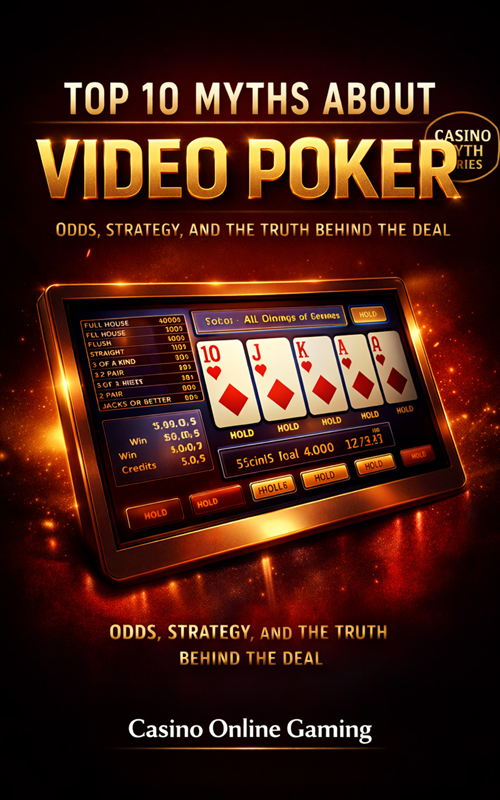
As an expert in gaming mechanics, I encourage you to further explore the structural engineering of casino games to better protect your bankroll and enhance your understanding of the floor. An ebook with more technical details and comprehensive information called “Top 10 Myths About Slot Machines: Hot Machines, Near Misses, and the Truth Behind Every Spin” is available for FREE on Google Books.