Top 10 Myths About Keno: Near Misses, Lucky Numbers, and the Truth About the Draw
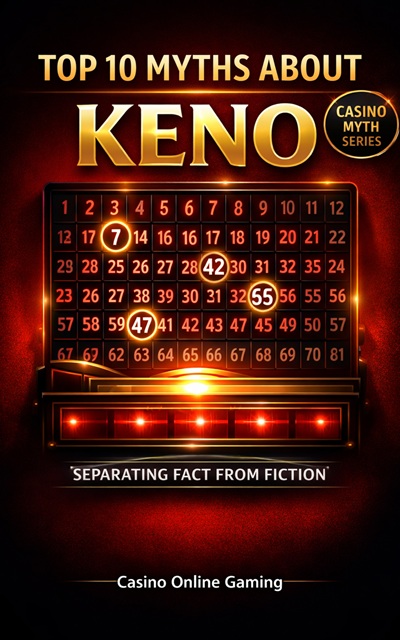
Watching the keno board light up is a mesmerizing experience as we wait for our numbers to appear and feel like patterns are forming. We have all had that heart-pounding moment where a number lands just one inch away, making it feel like we are just about to crack the code. However, behind this visual excitement lies a rigid mathematical structure where every draw is an independent event that resets completely after every round.
Almost Winning Means You’re Close
We’ve all felt that rush when a number lands right next to our choice, but it’s important to remember that almost doesn’t count in the eyes of the machine. This near-miss effect creates a powerful psychological illusion of progress even though the mechanical reality remains unchanged. Because the system only recognizes exact matches and does not track proximity, your chance of winning on the next draw is exactly the same as it was before.
Picking Your Own Numbers Improves Your Odds
It’s easy to feel more confident when we use birthdays or anniversaries, but this illusion of control does not actually influence the game’s outcome. Whether you spend time hand-picking every spot or let the machine generate a Quick Pick for you, the underlying math treats both tickets exactly the same. The probability of a match is fixed within the pool of eighty numbers, meaning your personal intention has no impact on the random draw.
Lucky Numbers Run Hot
When you see the same number pop up three times in a row, it’s natural to think you’ve caught a hot streak, but this is simply a random cluster. These numbers have no memory of past draws, so a number that just appeared is no more or less likely to show up again immediately. Short-term repetition is just statistical noise in a system that resets its probability field the moment a new game begins.
Quick Pick Is Rigged
Some players worry that automated selections are intentionally designed to be weaker, but the casino has no mathematical incentive to rig your number choices. The house edge is already fixed within the payout table, ensuring the casino’s profit regardless of how you pick your spots. You can trust that a Quick Pick ticket has the exact same mathematical potential as one you filled out by hand with your most trusted numbers.
Fewer Numbers Dramatically Increase Your Chances
You might feel like narrowing your field makes winning easier, but this perception is often fueled by Frequency Bias since smaller tickets pay out minor amounts more often. While you might see more frequent wins on a two-spot ticket, the payouts are adjusted downward to ensure the house edge remains perfectly intact. Choosing fewer numbers simply lowers the volatility of your session rather than giving you a structural advantage over the casino.
More Numbers Dramatically Increase Your Chances
Casting a wider net by picking more numbers feels like a smart way to cover the board, yet this actually makes the odds of a full match significantly longer. While the massive jackpots for high-spot tickets are tempting, the mathematical difficulty of hitting every single number increases much faster than the potential reward. Playing more numbers shifts your risk profile toward a jackpot or nothing experience without actually improving your long-term odds of coming out ahead.
The Board Runs Hot and Cold
We often talk about the board being in a mood, but this is a classic example of Recency Bias where we weigh the most recent results too heavily. The perceived temperature of the game is just our human response to the natural waves of wins and losses that occur in any random system. Even if the room feels electric with winners, the internal mechanics of the board never shift to favor or punish the players.
Casinos Adjust the Draw
When we hit a losing streak, it is common to fall into External Attribution Bias and assume the casino has tightened the game behind the scenes. In reality, regulated casinos rely on certified random number generators and fixed paytables that they cannot legally or mechanically change on the fly. Because their profit is already guaranteed by the math in the payout table, they have no need to manipulate the draw based on time or player traffic.
You Can Spot Trends
It’s tempting to study the board’s history to find a path to victory, but past results are strictly informational and hold zero predictive power. The game’s math resets completely with every round, meaning the board has no memory and does not care which numbers are due to appear. Trends are just visual patterns we impose on randomness, as the drawing mechanism starts every single game with a clean slate.
Keno Is Easier Than Slots
The slow pace and simple appearance of keno can make it feel safer than a frantic slot machine, but looks can be very deceiving in the casino. Keno often carries a higher house edge than many slots, proving that a game being easy to understand does not make it easier to win. While you might feel more in control watching the numbers climb, the underlying math is designed to maintain a consistent advantage for the house.
Added Information
If you want to dive deeper into the mechanics of the game, an ebook providing more comprehensive details on these myths is available on Google Books and as an Audiobook. These resources offer a complete look at how probability and psychology shape our experience in the keno lounge.